
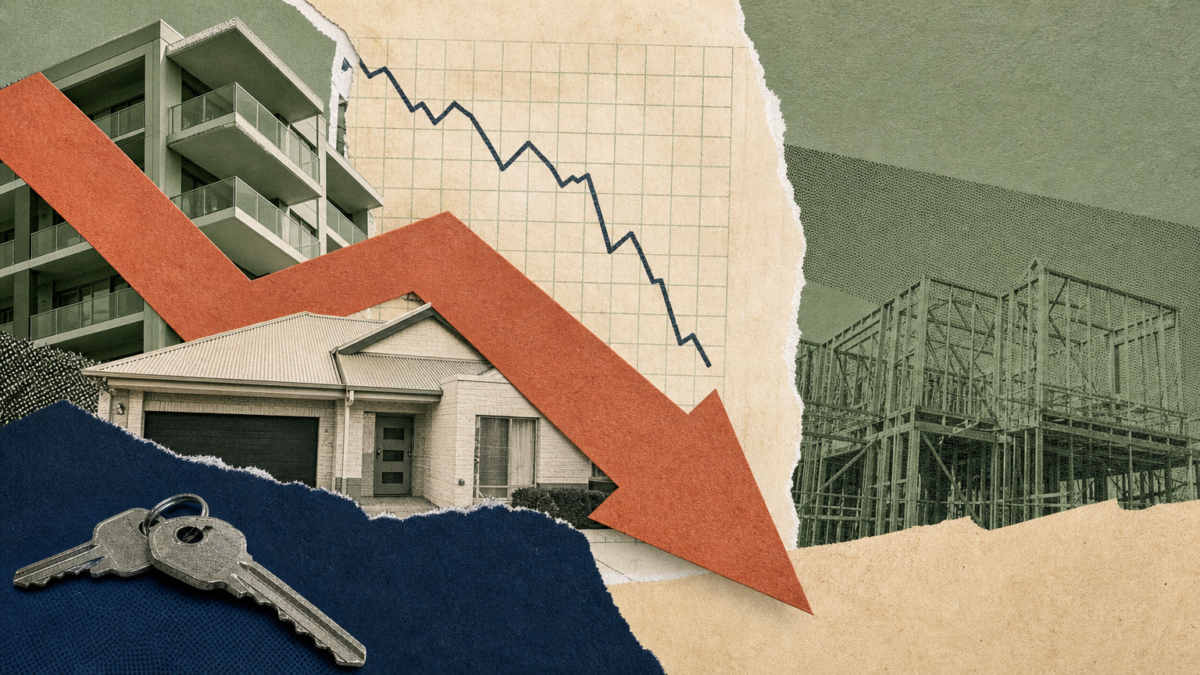
Australia’s property market is facing a sharp slowdown in new housing lending, with investors recording the biggest retreat as the number of new loan commitments falls to its lowest level in more than three years.
The latest figures from the Australian Bureau of Statistics (ABS) show the number of new housing loan commitments fell 15 per cent in the September quarter to 111,878, while the total value of lending dropped 15.5 per cent to $81.2 billion.
However, it is the scale of the investor slowdown that stands out, with new investment loan commitments falling 30.6 per cent to 35,301, down from 50,845 in the June quarter.
The value of investor lending fell even more sharply, dropping 32.3 per cent to $24.7 billion, compared with approximately $36.5 billion three months earlier.
Compared with September 2025, the number of investor loans has fallen 38.5 per cent, while their total value is down 38.1 per cent.
The figures point to a significant shift in borrowing activity, with investors accounting for a much smaller share of new housing finance than they did a year ago.
The decline raises questions about the depth of investor demand, particularly in markets where investment buyers have been an important source of competition for available properties.
Owner-occupiers and first-home buyers also retreat
While investors recorded the largest decline, owner-occupier lending also weakened during the September quarter.
The number of new owner-occupier loans fell 5.3 per cent to 76,578, while their total value declined by the same percentage to $56.5 billion.
Compared with the same period last year, owner-occupier loan numbers were down 9.8 per cent, suggesting the slowdown extends beyond investors.
First-home buyers also showed signs of pulling back, with the number of new loan commitments falling 8.6 per cent to 26,415.
The value of first-home buyer lending declined 8 per cent to $16.2 billion, while the number of loans was 12.3 per cent lower than a year earlier.
The figures suggest purchasing activity is becoming more subdued across several buyer groups, rather than being confined to one segment of the market.
This could translate into a smaller pool of financed buyers, although lending commitments do not directly measure property transactions or buyer enquiries.
Average mortgage size rises despite lending slowdown
Despite the sharp fall in new lending commitments, the average size of an owner-occupier mortgage increased during the September quarter.
Nationally, the average new owner-occupier loan rose from $731,000 in June to $736,000 in September, according to the ABS’s original, non-seasonally adjusted figures.
New South Wales continued to record the highest average owner-occupier loan at $847,000, followed by Queensland at $754,000 and Western Australia at $721,000.
Victoria’s average loan size increased to $669,000, while South Australia recorded $667,000.
The figures highlight the distinction between the number of buyers securing finance and the amount they are borrowing, with average owner-occupier loan sizes remaining elevated even as overall lending activity weakens.
Investor loan sizes, however, moved in the opposite direction, with the national average falling from $708,000 to $691,000 over the quarter.
What the slowdown means for agents
The latest lending figures add to evidence of a cooling housing market, with the particularly sharp decline in investor activity potentially having implications for sales campaigns and buyer competition.
Investor loans accounted for approximately 31.6 per cent of new dwelling loan commitments by number in September, down from around 38.6 per cent in June.
In dollar terms, investors represented approximately 30.4 per cent of new housing lending, compared with almost 38 per cent in the previous quarter.
Source: ABS data.