
The pandemic exposed long-standing structural weaknesses in property management teams across the country.
Eviction moratoriums, rent negotiations, compliance changes and anxious landlords placed extraordinary strain on departments already operating at capacity. Portfolio managers were stretched thin and many left the industry altogether.
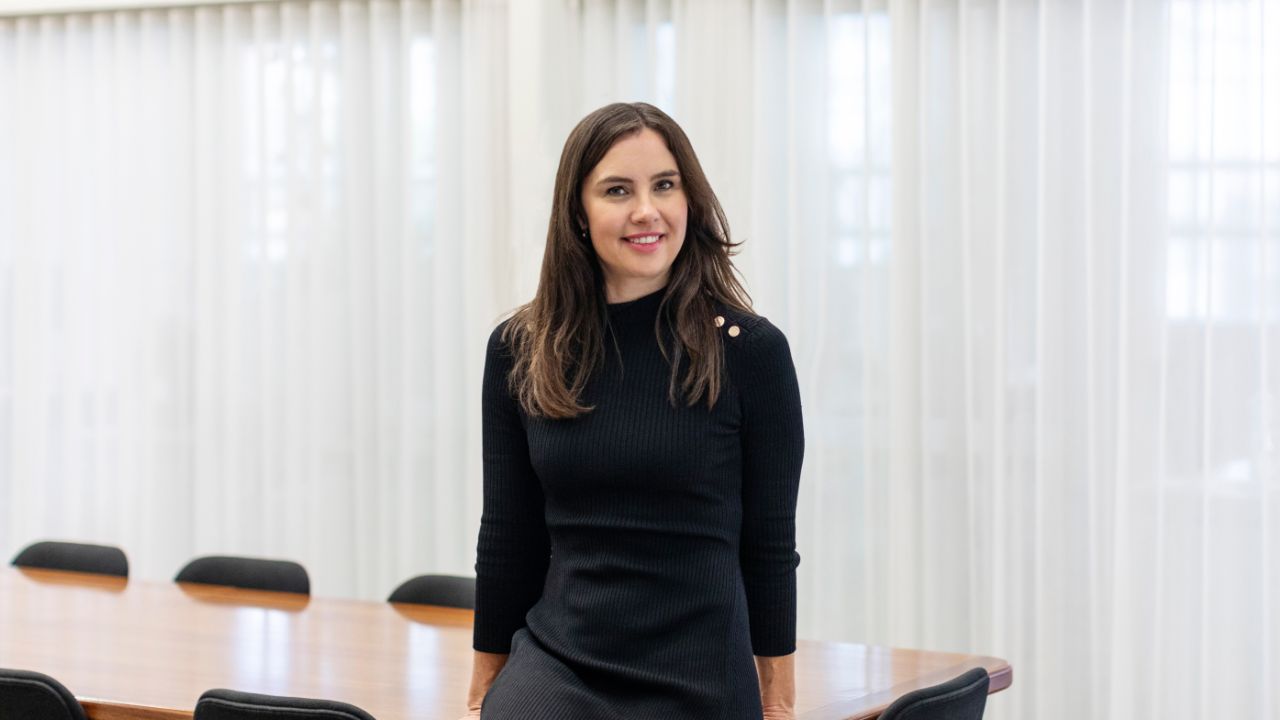
For Chantelle Collin, Head of Property Management at BresicWhitney, the disruption brought something into sharp focus.
“We had a lot of senior managers,” Chantelle says. “In fact, nearly everyone was a senior portfolio manager. And during that time, people were exiting because of the pressure.”
The problem was not simply workload. It was the operating framework itself.
As she stepped into the leadership role during the height of the pandemic, Chantelle began questioning whether the traditional property management model, heavily reliant on experienced staff carrying large, end-to-end responsibilities, was sustainable at scale.
Her conclusion was clear: recruitment alone would not fix it, the system needed redesigning.
The weakness in the traditional ladder
Property management has long operated on a familiar hierarchy: assistant property manager, property manager, senior property manager.
On paper, the progression appears straightforward. In practice, advancement can feel opaque and the distinctions between levels are often blurred.
At the same time, many agencies rely heavily on lateral hires to plug gaps rather than deliberately building talent from within. Chantelle saw both issues unfolding simultaneously.
“We didn’t really have people coming up through the ranks,” she says.
“We needed to grow our own and develop people from within.”
The first significant change was the introduction of a Field Services Representative program, effectively a cadetship into property management.
Over twelve months, new entrants rotate through inspections, condition reports and external appointments, learning the operational backbone of the department before transitioning into portfolio management under formal mentoring.
“It became an entry point into property management or real estate,” she explains.
“From there, we develop them into portfolio managers, into leasing, or into other areas depending on their skills and interests.”
Five years on, the impact is measurable. Internal promotions are common, recruitment pressure has eased and career pathways are clearly defined.
“Our reliance on external recruitment has definitely reduced,” Chantelle says.
“It’s largely how you start in property management with us now.”
For an industry grappling with talent shortages, that shift matters.
Breaking the one PM does everything model
Pipeline alone, however, does not eliminate burnout.
One of the longstanding stress points in property management is the breadth of responsibility concentrated in a single role.
Leasing, inspections, maintenance, arrears, landlord communication and tenant disputes are often funnelled through one person.
Chantelle believed that concentration of responsibility was part of the strain.
Rather than relying on individual heroics, the department provides flexible options based on people’s career aspirations.
“The hybrid pod structure is an opportunity for people who want to mentor,” Chantelle explains.
“It allows someone who is just starting out to work with a mentor, and the mentor gets an opportunity to establish leadership skills.”
Senior portfolio managers focus primarily on strategic oversight and owner relationships.
Level one property managers work more closely with tenants and operational tasks.
Field services representatives handle inspections and external appointments.
From a landlord’s perspective, the experience remains streamlined.
“Clients value having one consistent point of contact,” Chantelle says.
“Our portfolio managers operate more like relationship managers – they lead the communication, understand the bigger picture of the client’s investment, and coordinate the broader team behind the scenes. It means the client experiences one trusted advisor, not multiple touchpoints.”
Behind the scenes, responsibilities are distributed more strategically. The result has been increased capacity and reduced individual strain.
Portfolio managers are no longer consumed by heavy administration and routine tasks, allowing them to focus on higher-value interactions and proactive service.
Redefining what high performance looks like
In many PM businesses, success is measured almost exclusively by properties under management. Chantelle believes that metric tells only part of the story.
“I think sometimes we can get caught up on one single number,” she says.
“Properties under management, results, profit – they’re all important metrics, but there are smarter ways to work than fixating on any single number.”
Instead, the department tracks a broader set of performance indicators including customer service outcomes, portfolio health, operational benchmarks and margin performance.
Regular client surveys are embedded into the framework, ensuring service standards are measured rather than assumed.
Even so, numbers alone do not define performance.
“A successful team looks like a happy team,” Chantelle says.
“It’s really important to me that when people come to work, they’re not dreading coming to work. If you’ve got happy people, you’ve got happy clients. And the reason for investing in people shows in strong business results.”
Since implementing the changes, retention has improved year on year.
Turnover, a persistent industry challenge, has stabilised.
“We don’t really have that high turnover,” she says. “When a team feels supported and enjoys the people they work with, it changes everything.”
Leadership beyond hierarchy
Scaling a department to nearly 50 people inevitably introduces complexity.
Rather than centralising decision-making authority, Chantelle built layered support into the structure, including a People and Performance Leader, an Operations Leader and pod leads within each office.
“As you grow, there’s more complexity,” she says. “You need the right structure in place.”
Equally important is psychological safety. Monthly one-on-one check-ins are structured and consistent.
Each team member develops a personal growth plan reviewed annually and an Employee Assistance Program remains available at all times.
“I always say to the team, don’t suffer in silence,” Chantelle says. “I can’t help you if I don’t know.”
Having worked across almost every role in property management herself, she believes leadership credibility comes from lived experience.
“It gives you insight into what people are experiencing,” she says. “You learn what hasn’t worked.”
One of the more understated strengths of the approach is that it is not static.
“It’s iterated every year,” Chantelle says. “We look at what’s working, what isn’t. If you just put something in place and never revisit it, that’s not a smart move long term.”
That willingness to refine the structure annually, rather than defend it, has allowed the department to evolve alongside market conditions, team needs and operational realities.
People first, even in the age of automation
Technology and automation are reshaping property management across Australia, but Chantelle recognises the efficiencies such as improved systems and reduced administrative load, but remains cautious about overreach.
“There’s certainly a lot of conversation around tech and automation,” she says. “It definitely has a place. But there’s a danger in automating too far.”
In her view, the next phase of property management will reward those who build the strongest relationships, not simply the most efficient workflows.
“If you’re starting a PM business today?” she says, without hesitation. “People.”
Recruit the right people, develop them deliberately and importantly, support them visibly.
It’s an approach that has proven itself not just in retention metrics, but in the performance of the business itself.
Because structure can reduce burnout and technology can increase efficiency, but without the right people supported by the right framework, the pressure eventually returns.
The pandemic may have forced a reset, but what has emerged since suggests that sustainable property management leadership is less about portfolio size and more about thoughtful design.