

New research from Loan Market has laid bare just how stressed and uncertain many Australians feel about buying property, particularly when it comes to auctions.
According to the data, 25% of Australian homeowners found the home-buying process “very stressful and challenging,” while 15% say they wouldn’t have a clue where to start. The confidence gap is sharply generational:
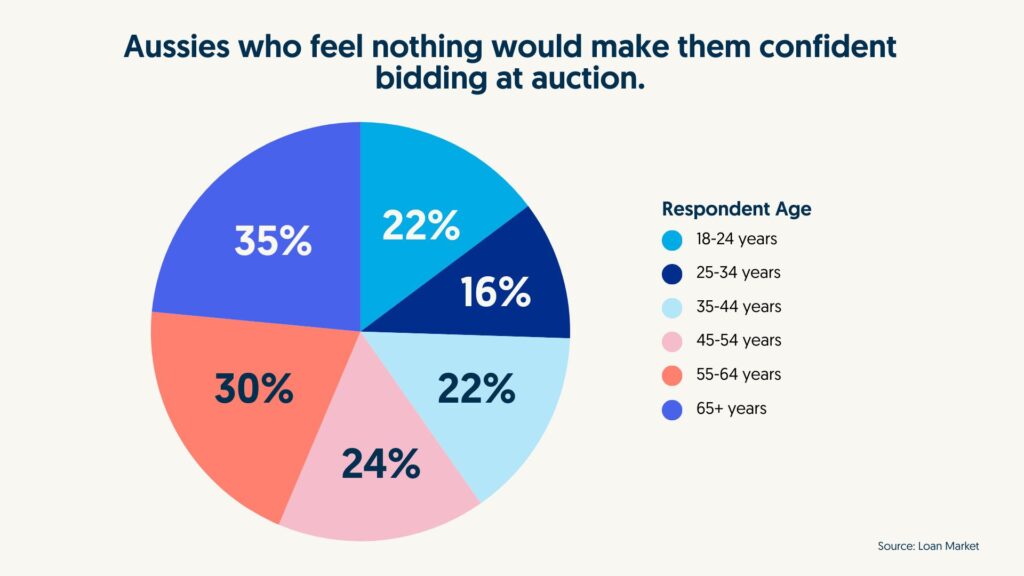
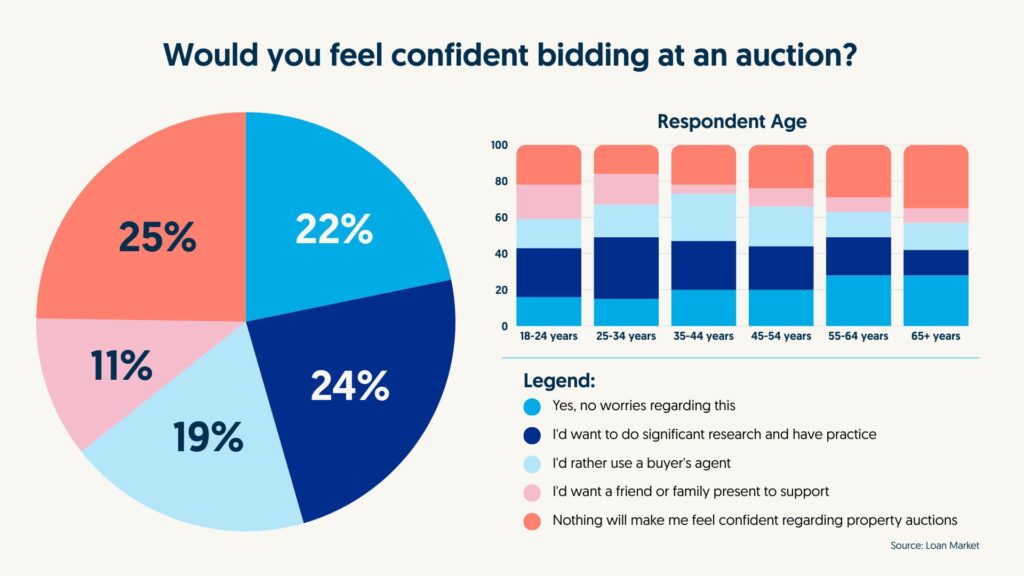
- 33% of Australians over 55 say nothing would help them feel confident at auction
- 61% of under-35s say they need significant research and practice to feel prepared
- 31% of under-35s feel comfortable bidding after research and rehearsal
- ¼ of all Aussies believe that no amount of research or support will ever make them confident
Loan Market director, Kris Faife, says the numbers reflect exactly what he sees among buyers on the ground. Much of the anxiety, he says, stems from fast-moving conditions that make it difficult for people to judge value.
“Because the market has become so volatile, it’s really difficult for customers to know where a property is going to land,” he said.
The issue isn’t only on the buyer’s side, Mr Faife explains that even vendors and agents can struggle to keep pace with rapid price movements.
“A lot of vendors, their perspectives are set on what they can see properties selling for in the last three to six months. The market’s moving too quickly for vendors and even agents to understand where the market’s at.”
This disconnect often plays out at auction. Buyers turn up relying on the listed range, only to watch bidding move well beyond it.
“They rock up to auction, and they go away with this perspective that auctions deliver results well over the range,” Mr Faife said.
“For a lot of first-time buyers in particular, they’re using the listed range to determine where they need to be.”
The biggest buyer mistake: relying on the price guide
Mr Faife spends significant time resetting buyer expectations. His team pushes clients to stop anchoring themselves to the online guide and instead look at hard data.
“We’re much better off looking at the comparable sales over the last three months and then determining whether the property that sold is inferior or superior to the property they’re bidding on.”
Without this preparation, many first-home buyers spend months attending auctions and leaving empty-handed.
“Far too often we see first-time buyers go into the market and spend six months being outbid and be really discouraged,” he says.
That discouragement often morphs into a belief that auctions inherently sell for more; a conclusion Mr Faife says isn’t supported by the evidence.
“When you look at the data, the actual results don’t favour the method of sale. It’s pretty consistent… it’s just that there’s a difference in how the property is listed online.”
Why auction transparency matters in a cooling confidence cycle
After the recent seller’s market, buyer confidence has cooled. Despite this, he believes auctions remain the fairest and clearest way to buy:
“Auction is the most transparent way to buy property, particularly at the moment. Everything happens in front of your eyes as clear as day.”
He says well-prepared buyer, using comparable sales and clear bidding limits, tend to be far more successful and far less stressed.
“When we take the time to go through the comparable sales and then set bidding limits… they’re a lot more successful at auction.”
Generational confidence gaps explained
Loan Market’s data highlights a stark contrast between age groups. Over-55s are the least confident, with one in three saying nothing would make them feel more comfortable.
According to Mr Faife, their lack of confidence makes sense. Many older Australians purchased property decades ago in a market where private treaty dominated, and live auctions were rare.
Younger buyers, meanwhile, have grown up with auctions as a standard method of sale. Although 61% still need to research heavily to feel confident, they are generally more comfortable navigating real-time decision-making once prepared.
He says the most effective way to reduce buyer stress, regardless of age, is to remove guesswork and anchor decisions in evidence.
“Clients are able to go in, find a property, set an appropriate bidding limit, and they’re a lot more successful at auction.”