

If someone who’s spent 13+ years writing about this industry can be charmed into writing the success story, what chance does an average seller have when that same charm shows up at their kitchen table with a listing agreement?
It’s been a while for me between “serious” editorials, but my word for this year is “values.” Maybe I knew in my gut that it would be tested this year. These are interesting times, and so, well – here we are.
Grab a cuppa and strap yourself in.
The catalyst
Josh Tesolin has been banned from real estate for 10 years. You know this. Everyone knows this. It was front page of the SMH, trending in real estate Reddit threads around the country, and probably discussed at length over at least two thousand or more open home conversations last Saturday.
So I’m not going to rehash the details. NSW Fair Trading did that quite thoroughly.
Tesolin’s response to the ban, via podcast? “I’ve got lots of money, lots of good friends. I’ve got a great legal team as well.”
And, my personal favourite: “Journalists that write erroneous articles… they need Jesus.”
Dear Josh, we do not need Jesus. What we actually need is change and the truth.
My relationship with Josh
I met Josh Tesolin quite a few times. Elite Agent documented his rise. One of our former employees wrote one of the first stories about him, about how he made a million at GCI in his first year.
I thought I’d seen it all before. I reluctantly invited him in for a podcast, and I actually didn’t want to like him. But he somehow won me over. He was charming and funny, with the gift of the gab. What really got me was how he spoke about his mother with such genuine love that you couldn’t help but warm to him.
I feel a bit like an idiot now.
But that’s kind of the point, isn’t it? The charm was always the product. The system just never asked what it was being used for.
We celebrated him
Let’s start with what’s really uncomfortable.
The industry that just watched one of its most celebrated agents get a decade-long ban is the same industry that celebrated him. Repeatedly. Publicly. With trophies, stages, keynotes, and accolades.
Top Agent. Number One. Record-breaker. Six-time this, three-time that.
Every one of those awards was based on volume and revenue. But the unfortunate thing is that real estate awards have never factored in consumer outcomes.

Maybe that’s a big part of the problem.
One suburb, two suspensions
Here’s the detail that should worry everyone as much as, if not more than, the Tesolin ban itself.
After Tesolin was suspended, another agent in the same suburb – Quakers Hill – stepped up to become the area’s top seller. Within months, that agent was also suspended by Fair Trading. Same allegations. Same practices. Same suburb.
Two top-performing agents. One suburb. Both suspended for underquoting.
That’s not a personnel problem. That’s a system problem. And when the person who replaces the person who got caught is doing the same thing? Again, that’s a system, not one person.
NSW Fair Trading has now taken disciplinary action against more than 50 agents in the past 12 months. The “Name and Shame” register is live.
I hate the idea that this thing even has to exist, because it affects all the good people in the industry who spend their lives in these shadows while doing the right thing.
Culture is caught, but these practices are taught
Tesolin did the wrong thing, but he didn’t invent underquoting.
He didn’t invent auction conditioning. He didn’t invent “incentive commissions” or the practice of over-quoting to win a listing and then grinding the seller’s expectations down to meet the market.
They’re in coaching programs around the world. They’re on stages at industry events. They’re framed as “vendor management,” “price conditioning,” and “commercial discipline.”
The language is always clean. The outcome isn’t always. I’ve been vendor conditioned. I literally wanted to throw something at the agent who was doing the conditioning and earnestly delivering scripts I’d heard delivered on various stages over the years.
My point is, these practices did not emerge in isolation. They’ve evolved over time through a mix of training, experience and market pressure. And a lot of remixing of materials over the years.

The situation we’re looking at now isn’t only about Josh Tesolin. You’re looking at a standard set list that gets played at conferences and behind many a closed door. The only real difference is who’s in the DJ booth.
From Agent to Coach
So now we’ve come full circle, and there was a recent event where we’re not seeing anything that’s actually new, just people on stage “operating at a meaningful level within the industry”.
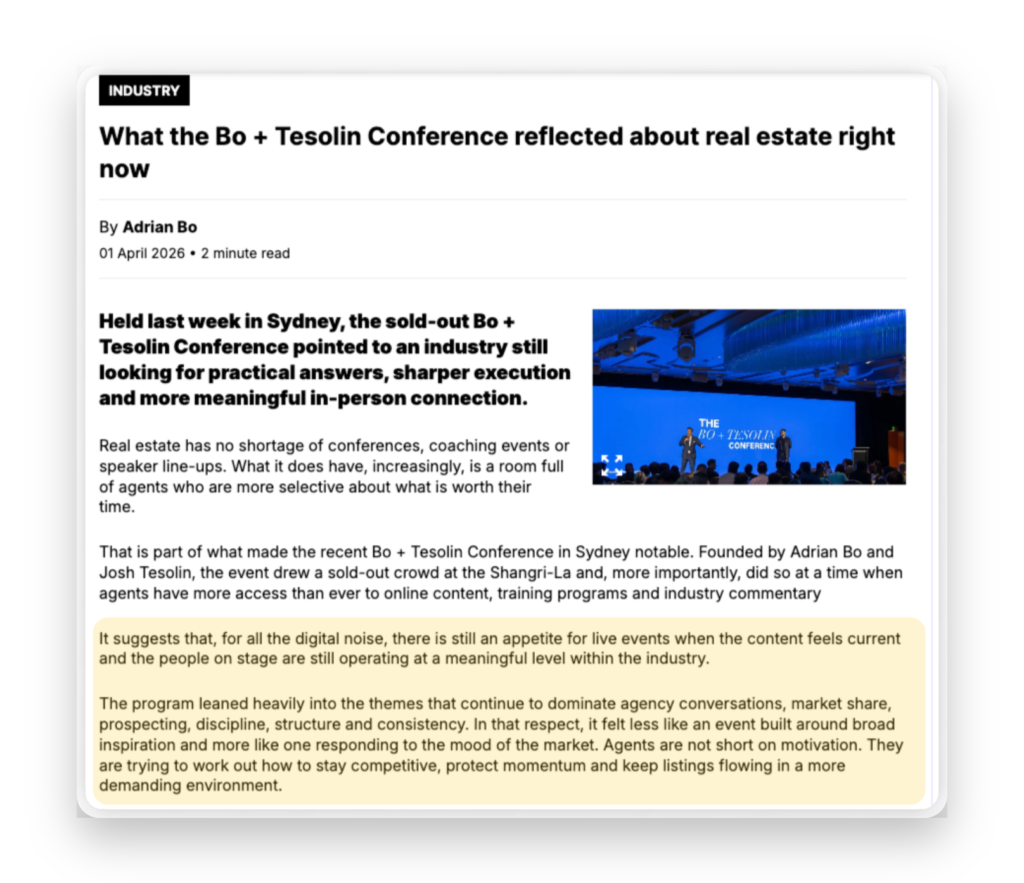
Again, there’s outrage. Everyone I’ve spoken to in the past week has said some version of the same sentence: “It’s not good enough.” “How can they be allowed to coach?”
You can’t be a coach if people don’t listen to you. The industry has to accept some responsibility here as enablers of some of the problems we complain about.
And that’s the bit that grinds me. A lot of the loudest voices right now are calling for cancellations and demanding new MCs at conferences – even though they deeply understand the ecosystem that built the problem. Outrage is easy. A cheap LinkedIn post costs nothing.
But not one of those posts has offered a single macro idea for what comes next. If your contribution to the conversation is calling for individuals to be cancelled and nothing else, it might be worth taking another look at the bigger picture.
The future: You cannot charm an algorithm
So… what’s the industry’s realistic response going to be?
It’s easy to be outraged once it’s safe, and I’m not going to pretend I am above that.
Too hard basket, perhaps? Again, not helpful.
Elite Agent published content featuring Josh Tesolin. We’ve since taken all of it down. Not quietly archived. Removed. And… we are actively reviewing more of our content now.
That’s not a victory lap. That’s a late start. But it’s a start.
In my AI keynotes, I talk about the “messy middle,” which, in terms of the real estate industry, is right now.
When I look at the various governments’ fixes for underquoting – like mandatory price guides and statements of information – through the lens of 2026, it feels a little bit like requiring a man with a smartphone to carry a map just to prove he knows where he’s going.
My crystal ball says that when a 2030 buyer uses their personal AI agent to cross-reference an agent’s quoted price against their historical sales data, any discrepancy will be instantly flagged.
The AI won’t just tell the buyer the house is underquoted; it will put a warning label on the agent.
Looking at the wave of tools in our hands right now, I would think that by 2030, consumers shouldn’t need a government “Name and Shame” register.
By that, I mean if an agent has a verifiable digital history of underquoting, dummy bidding, or shady tactics, buyer AI will simply filter their listings out of the feed.
Shady agents won’t need to be banned by the government; they will be shadowbanned by the market.
But we’re not yet in 2030, and the messy middle is where we live right now.
And it’s going to get messier…
What AI still can’t fix
I can show you how to whip up a spreadsheet of comparables with Google’s AI in about 5 seconds. I can even show you how to research a property to find its hidden value, hidden risks, and more.
But underquoting is not just about the data. It’s a psychological tactic designed to manipulate human behaviour – artificially inflating the crowd size on auction day.
This is the part that deserves more attention than it usually gets.
While AI is moving fast and doing a great job of democratising information, it has not and cannot surface or democratise human intent.
Even if your AI tells you a house is worth $1.5 million, if the agent lists it at $1.2 million, a primal, irrational part of your brain might think, “Maybe the seller is desperate. I should go just in case.”
And then… when 50 people show up hoping for a bargain, the AI’s logical valuation goes out the window. The sheer presence of competition triggers FOMO, driving the final price higher than the AI predicted.
That’s the gap. AI can get close to market value. But it doesn’t know what the vendor needs to move. The agent and the seller still hold a monopoly on that specific piece of information.
And as long as that asymmetry exists, the psychological playbook still works – even on informed buyers.
Closing the gap
So, right now, we have one foot stuck in the 2019 playbook of vendor conditioning and information hoarding, and the other is hovering over a 2030 reality of AI-driven transparency.
And let’s be clear: an agent’s job is to get the highest possible price for their vendor. That is genuinely hard work. But let’s be brutally honest – it’s not just agents who are clinging to an old playbook.
There are plenty of sellers out there who aren’t squeaky clean either.
Every time a seller chooses the “bulldog” agent who promises a massive crowd, knowing full well that crowd is being lured by a fictional price guide, they are complicit, too.
Some vendors out there have historically loved the dark arts of real estate because the agent takes the ethical and regulatory risk, while they cash the cheque.
They want the highest price, and they rarely care if a few dozen buyers get their hearts broken and their wallets drained on building inspections along the way.
So, how do we actually achieve transparency if some sellers resist it and agents are still being trained to fight it?
We cross that bridge if and when the technology flips the financial incentive.
The shift won’t happen because we all suddenly have a collective moral awakening. My best guess is that it will happen because, in an AI-filtered world, hiring a deceptive agent will taint the asset. It will literally cost the seller clicks, leads, and money.
The messy middle ends the day all parties – sellers, buyers and agents – realise that absolute, verifiable truth is the only way to get their property past the algorithmic bouncers.
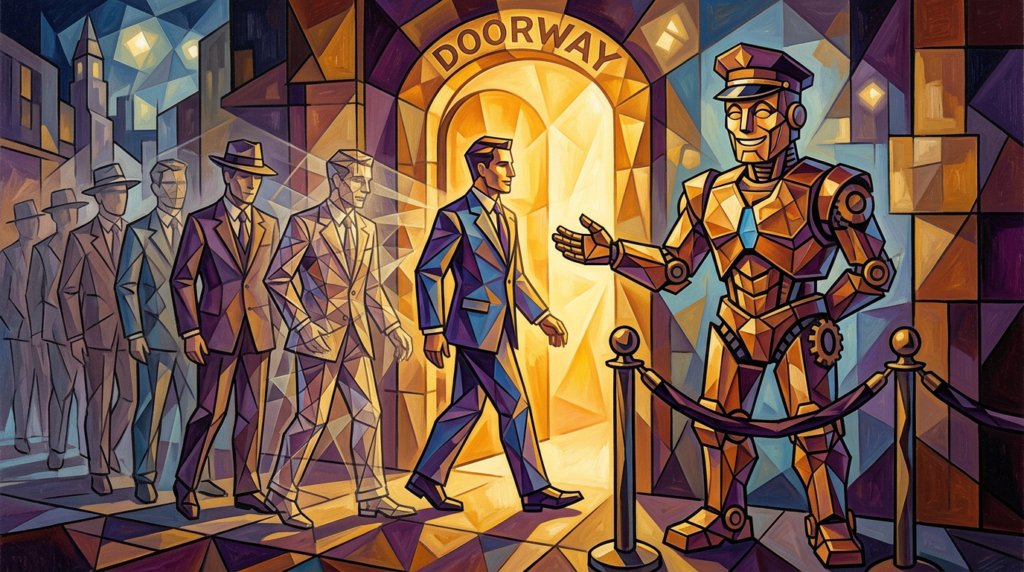
Trust can shift from a regulatory burden to the ultimate premium feature.
What can we do now?
Of all the people I’ve talked to over the years in this industry, the vast majority agree that trust remains the foundation of this profession.
So in practical terms, what needs to change?
Over the coming months, I will be asking industry captains for their thoughts and ideas. But here are a few from me in the meantime:
Awards need a compliance filter. Volume without integrity is just noise. You shouldn’t be able to win a volume award without a customer outcome metric.
The franchise networks see the numbers before anyone else – they could intervene before someone goes off the rails, not after. Let’s promote radical transparency as a feature, not a flaw.
The portals and other platforms are data companies. They are perfectly positioned to pioneer algorithmic trust, if they choose to.
Coaching needs transparency. Unregulated doesn’t have to mean unaccountable. Choose wisely who you give your attention to.
The trade press – including Elite Agent – needs to be far more circumspect about who we hand the microphone to. I’ll be working hard on that one personally. I’d like to call on REB to do the same.
Conference organisers – rethink who gets the stage and your microphone. Maybe it’s time we invited some consumers up there, too – let’s actually hear what they want.
My point is this: No one micro-fix will solve this. And while the industry debates who to cancel next, the technology will continue to quietly rewrite the scoreboard regardless. The question is whether we work together – or wait until the technology decides for us.

The profession you want to be
Here’s what I keep coming back to.
Real estate agents – the good ones, and there are so many of you – are fiercely proud of what you do. You’ll tell me about the family you helped find their first home. The widow you guided through selling the house she’d lived in for 40 years. The investor who trusted you with a decision that changed their financial future.
There are hundreds, if not thousands, of stories about these agents on eliteagent.com.
That pride is legitimate. You are good humans.
And it’s exactly why this moment matters.
Because every time an agent is caught doing the wrong thing, it doesn’t just hurt that agent’s reputation. It hurts yours. It lands on every doorstep conversation, every listing presentation, every auction registration where a buyer looks at you and wonders: Can I trust this person?
To the leaders of our major franchises, the heads of our portals, and the principal advertisers who fund this ecosystem: you are not the target of this frustration; you are the solution to it.
The agencies that survive the next decade will be the ones that adopt verifiable transparency. If an agent’s primary value is “keeping secrets to drive up the price,” AI will replace them. If their value is “managing a highly complex transaction with absolute, verifiable truth,” they will thrive.
What I care about at this moment is whether the industry treats this as a line in the sand – or if change is just too uncomfortable.
But if the industry doesn’t clean house, the technology will do it for us, and it won’t ask for permission.