

For decades, real estate has operated in episodes: win the listing, market the property, negotiate the deal, settle – then move on to the next campaign.
But what happens in the years between transactions?
That’s the gap Sheila Reddy, founder of Mosaik, believes is costing agents listings, referrals and long-term loyalty.
“If you’re capturing the life cycle, you shouldn’t be missing opportunities”
Ms Reddy is direct about the problem.
“We’ve seen scenarios where more than 20% of property owners in an agent’s past-client database had already transacted without them,” she says.
In other words, the database agents assume is secure is often leaking business.
Mosaik’s premise is simple but structural: if an agent supports the entire property ownership life cycle – not just the sale – the transaction itself becomes the natural outcome.
“It’s about automatically capturing the transaction by supporting the entire ownership lifecycle,” Ms Reddy says.

“When you’re managing and providing value throughout the lifecycle, you rarely miss opportunities.”
That philosophy underpins Mosaik’s move into Australia, where the platform is currently working with a limited group of founding members following its late-2025 market entry.
Why Australia – and why now?
While Mosaik operates as a full client life cycle infrastructure tool in the United States, spanning search, transaction and post-close, the Australian rollout is intentionally focused.
The post-settlement piece is where we see the biggest need and the lightbulb moment, Ms Reddy says.
“What we’ve heard from multiple agents is, ‘I don’t really do anything post-settlement to meaningfully stay in touch with my clients.’”
Ms Reddy described a common frustration for agents: “I drove past a house and saw a sign in the yard that wasn’t mine.
“I had done an appraisal for the owners a few months earlier and given them a lot of helpful information.
“I had even represented them when they bought the house, and we got along well. So I was really surprised that they didn’t call me when it was time to sell.”
She explained that this often happens because real estate relationships are typically transactional; agents are highly visible only during a sale or purchase, and then the connection resets.
Ms Reddy notes that in Australia, the response from agents has been immediate, showing that when given the right tools to stay connected, they quickly see the value of long-term client engagement.
“When we start talking about it, the majority of the folks we’ve spoken to understand it very intuitively,” she says.
“There seems to be a cultural inclination in Australia toward wanting to provide great client care. Agents just didn’t have a way to do that at scale.”
From generatic “touch points” to dozens value points a year
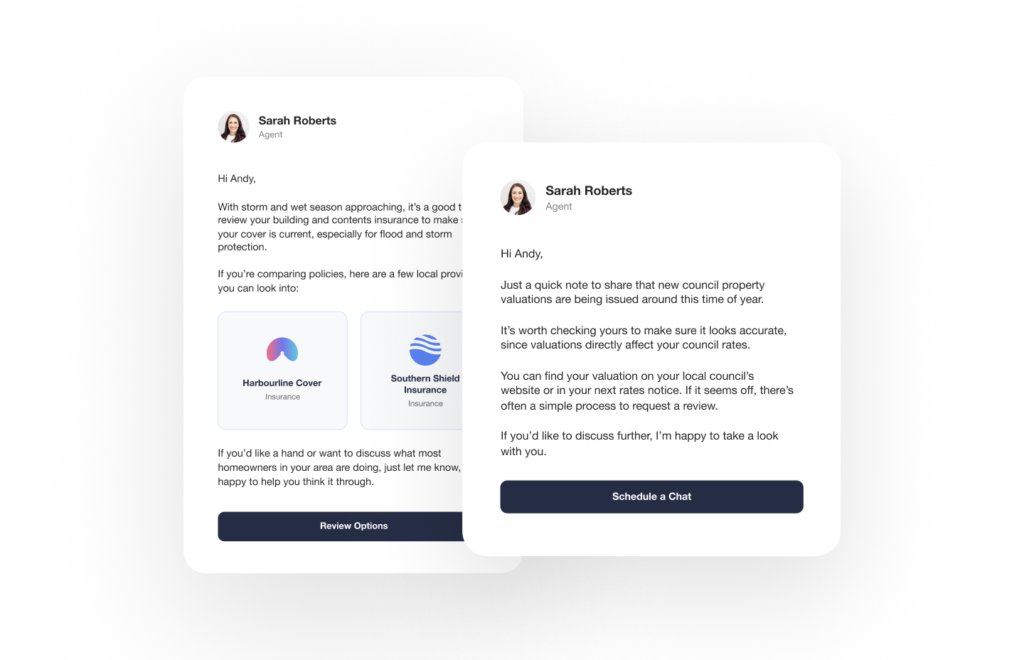
Rather than relying on generic CRM drip campaigns, Mosaik shifts established clients – past sellers, buyers, sphere, and appraisal contacts – into a managed property portfolio.
Each property owner receives a personalised portal linked to their address and their agent. From there, the system also delivers what Ms Reddy calls “value points” instead of touch points.
“Repeat and referral business ultimately comes down to perceived value,” Ms Reddy says.
“And value isn’t absolute – it’s how clients evaluate the experience relative to what they paid. Because the financial investment is already made at settlement, any value delivered afterwards shifts that evaluation in the agent’s favour.
“On average, we typically help facilitate anywhere from 24 to 36 of these personalised value points a year going out to a property owner,” she says.
These can include things like council rate reminders, maintenance alerts, storm preparation guidance and insurance renewal prompts, all personalised to the property and timed to when it’s most relevant.
“If you’re getting a generic market update or a ‘happy holidays’ newsletter, there’s just so much marketing spam that exists in the world that people gloss over it,” Ms Reddy says.
“But if you’re getting ‘Council rate reminder for 1234 MainStreet’, when I see my address, I am that much more likely to open it.”
In the US market, she says personalised emails regularly achieve open rates “well over 60 per cent at times” because of that address-level relevance and personalisation.
Reframing the agent as adviser
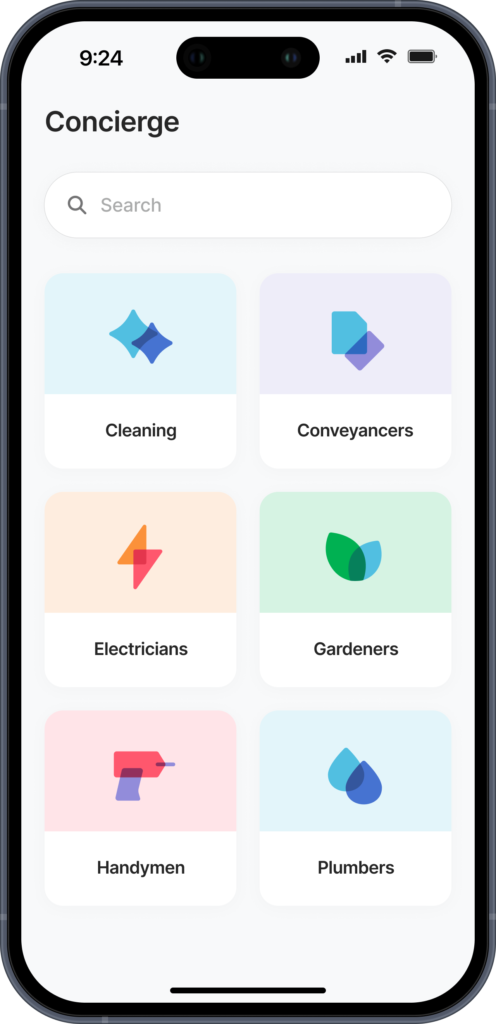
A core component of the platform is enabling agents to upload their vetted trade and service recommendations – electricians, cleaners, insurance brokers and other “mum and dad” operators who may not rank highly on search engines but deliver strong results.
“Consumers often end up seeing the people who spend the most on SEO or digital ads or have the most Google reviews,” she says. “Not always the people who consistently deliver the best results or value.”
Each time a client returns to their agent for a recommendation, the relationship deepens.
“If every time something I need to do in my house, I’m coming back to you for recommendations, you’re delivering value.”
Over time, that consistency builds reciprocity and trust – particularly in a market where affordability pressures and longer ownership cycles mean decisions carry greater weight.
“As decisions become more complex and expensive, people will skew towards expertise over commoditised services,” Ms Reddy says.
“There’s no better way to reinforce expertise than to be continuously offering it so it’s not even questioned by the time the higher stakes decision comes around.”
A competitive edge at appraisal
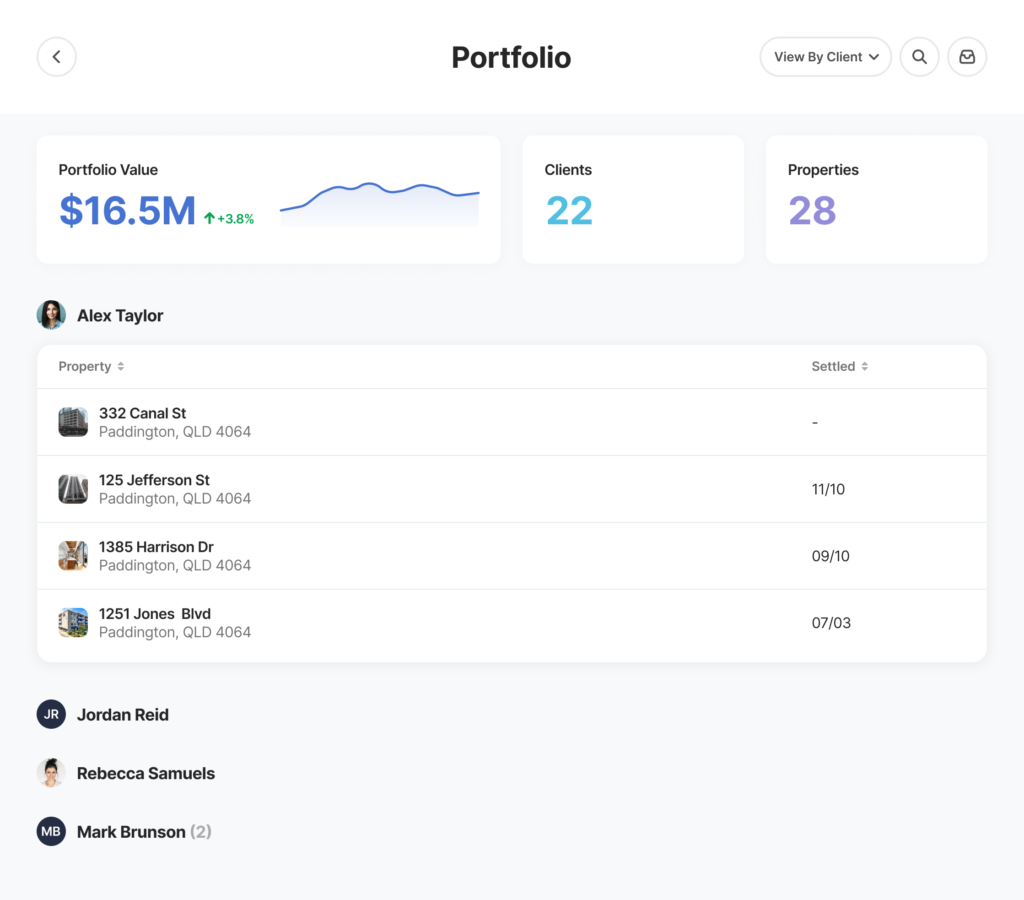
Beyond long-term retention, Ms Reddy says there are immediate strategic advantages.
Agents using the platform can quantify the portfolio they manage, including number of properties and combined value under advisory care, rather than simply citing recent sales.
“If you can say you manage a portfolio of 200 properties worth $100 million, and another agent isn’t measuring that, you’ve already separated from the pack,” she says.
Agents have also used the system to organically grow their client base by offering access to specific suburbs or networks of friends and family within their community.
Because subscriptions to the platform are limited, agents can position themselves as one of the few in their area with access to the technology.
One US client used this approach when reaching out to her network, resulting in nearly 40 additional property owners being added to her portfolio within weeks.
Those relationships that were then automatically nurtured through the system.
Making yourself the first call
At its core, Ms Reddy argues, the challenge for agents is not skill but visibility.
“If it’s easier for the person to go to REA and find a new agent or get in touch with whichever agent showed up in their letterbox that week than it is for them to come back to you, that’s what they’re going to do,” she says.
“Humans will inherently do what’s convenient over what’s best. So how do you make yourself perpetually the first call?”
For Mosaik, the answer lies beyond settlement day in the often-overlooked years between transactions.
And in a tightening, more competitive market, that shift from transactional operator to long-term real estate adviser may be what ultimately determines which agents build lasting businesses.
For more information about Mosaik and its Australian rollout, visit mosaik.io/australia